
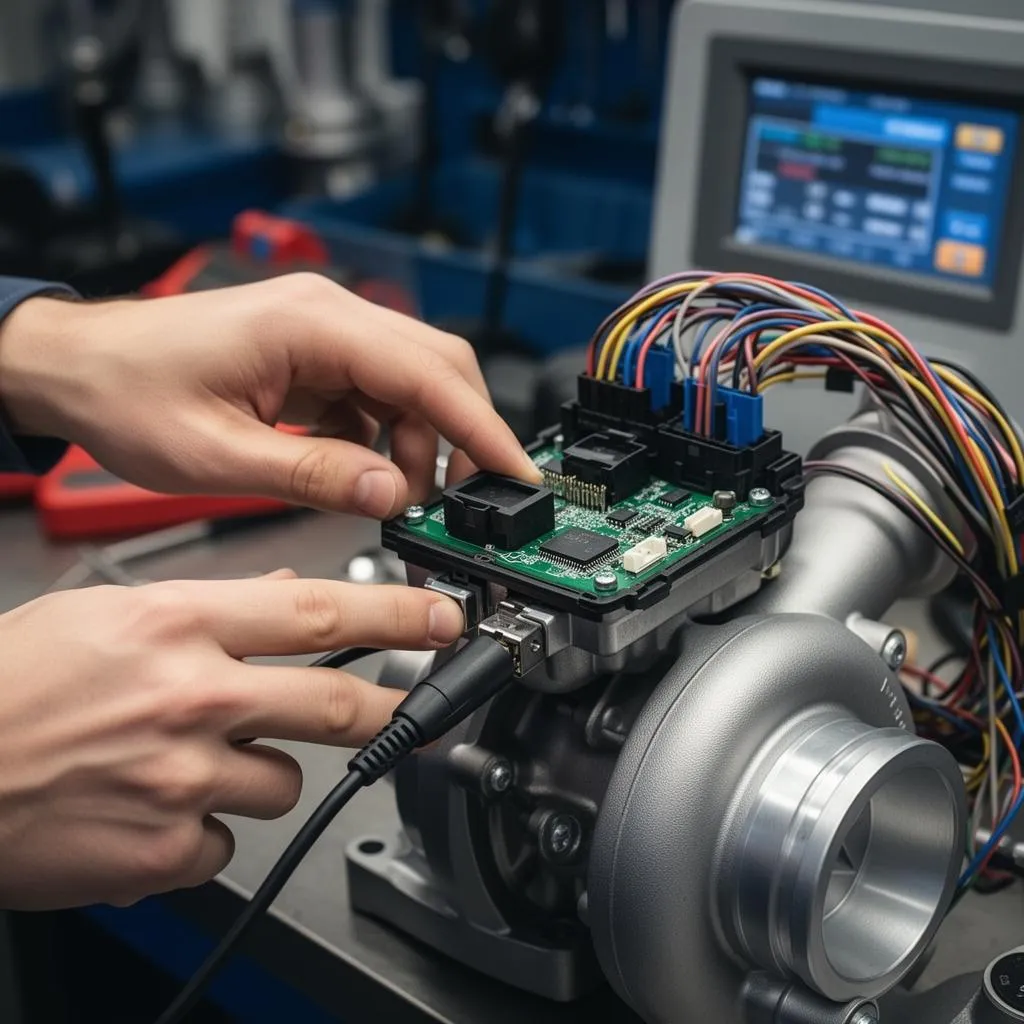
What the actuator does
The actuator moves the vanes of a variable geometry turbo (VGT) or opens the wastegate valve, and that is how boost pressure is controlled. It comes in two types: vacuum (driven by vacuum) and electronic (with its own motor and position sensor).
1. Limp mode
The engine computer limits power when boost pressure does not match the target. The car suddenly loses power and the Check Engine light often comes on.
2. Codes P0299, P0234, P0045
P0299 means underboost, P0234 overboost, P0045 a fault in the boost control circuit. Very often the cause is the actuator or the geometry, not the turbo cartridge.
3. Flat spots at certain revs
If the car pulls well low down but chokes at high revs (or the other way round), the actuator may not be moving the vanes to the right position.
4. The actuator rod does not move
A vacuum actuator rod should move freely. If it is stuck or moves in jerks, the cause may be the actuator itself or carbon-clogged geometry.
5. Clicking and buzzing
An electronic actuator may click or buzz when the ignition is switched on or off. An unusual noise often means worn gears or a failing position sensor.
Actuator or turbo?
A cracked vacuum hose, a faulty boost sensor or an intake leak can cause the same symptoms. That is why we test first instead of replacing everything. Our equipment lets us test and calibrate the actuator and geometry without replacing the whole turbo.
What to do
Do not drive in limp mode for long, and do not replace the turbo based on an error code alone. Bring it in for free diagnostics — we will find the cause and give you the exact price before any work starts.
Bring it in for free diagnostics. You get the exact price before any work starts.